Why Choose Our Dehumidifier for Growing?
1.Superior Dehumidification Efficiency
Compressor dehumidifiers are much more effective than semiconductor dehumidifiers, with a dehumidifying capacity 39 times greater. You may have previously purchased a semiconductor dehumidifier only to find it almost ineffective. This is why we recommend compressor dehumidifiers: they quickly process large volumes of air, provide better dehumidification, and are highly efficient.
2.What size dehumidifier do I need for my grow room?
This depends on how much water you use. Suppose you are growing 6 plants in a 4x4 grow tent, watering them every 2 days with 1 gallon (8 pints) per plant each time. You can calculate the dehumidifier size as follows:
-
Step 1: Calculate the total water used each time
6 plants * 1 gallon/plant = 6 gallons
-
Step 2: Convert gallons to pints
6 gallons * 8 pints/gallon = 48 pints
-
Step 3: Calculate the average daily dehumidification
48 pints / 2 days = 24 pints/day
-
Step 4: Consider low temperature and low humidity areas (reduce by 15%)
Basic requirement: 24 pints/day
Adjusted requirement: 24 pints * 0.85 (estimate 15% reduction for low temperature and low humidity)
Adjusted requirement calculation: 24 * 0.85 = 20.4 pints/day
-
Step 5: Consider high temperature and high humidity areas (increase by 15%)
Basic requirement: 24 pints/day
Adjusted requirement: 24 pints * 1.15 (estimate 15% increase for high temperature and high humidity)
Adjusted requirement calculation: 24 * 1.15 = 27.6 pints/day
3.What should the humidity be in a grow room?
While the key to successful growing is VPD (Vapor Pressure Deficit), generally, seedlings and clones require high humidity of 70-75%. As plants grow, gradually reduce humidity to 50-70%. During flowering, further reduce humidity to 40-50% and maintain this range until harvest.
All indoor growing systems benefit from a dehumidifier, but it is especially important for hydroponic systems. Proper ventilation also helps control humidity, so make sure to install fans or blowers.
4.Smart Features for Growers
-
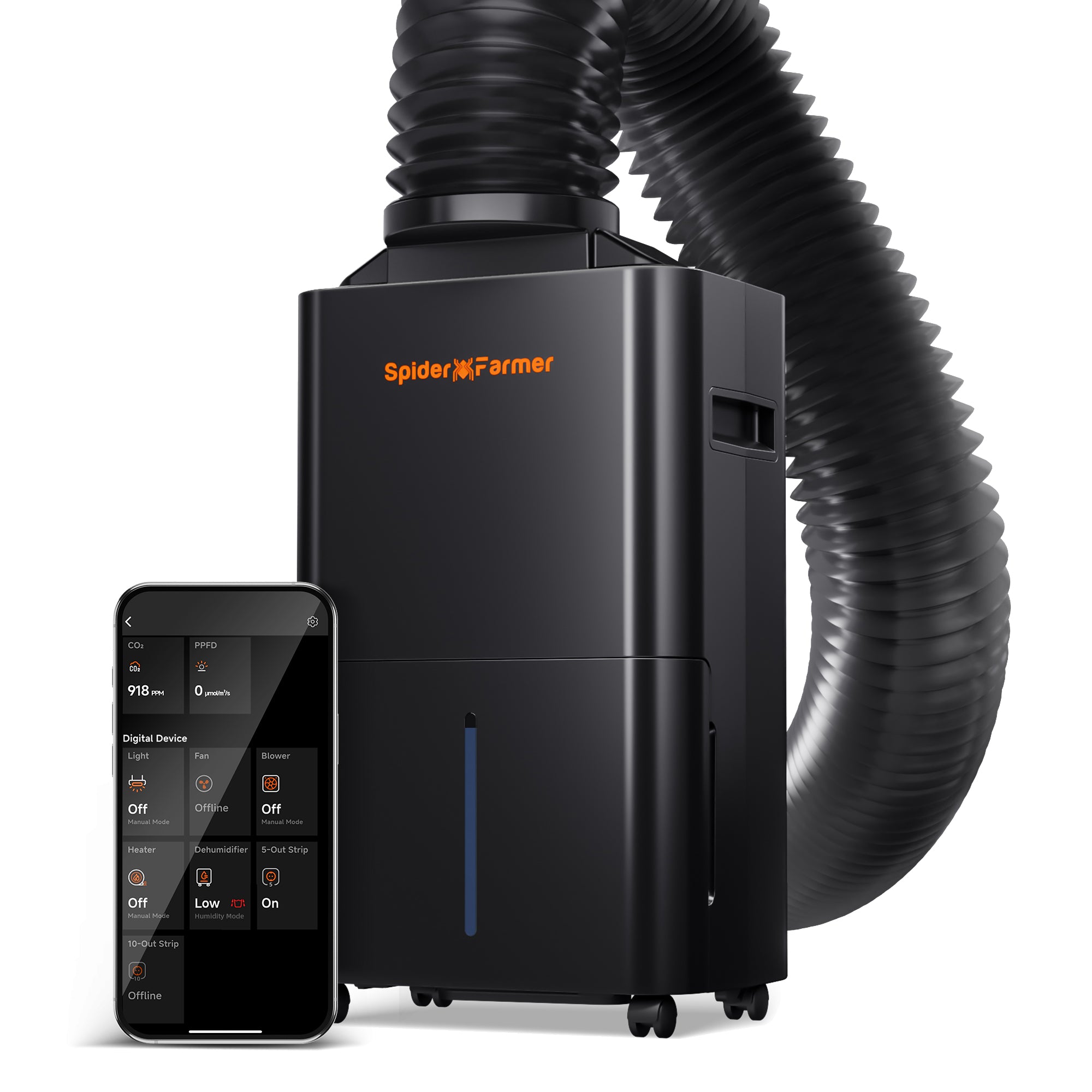
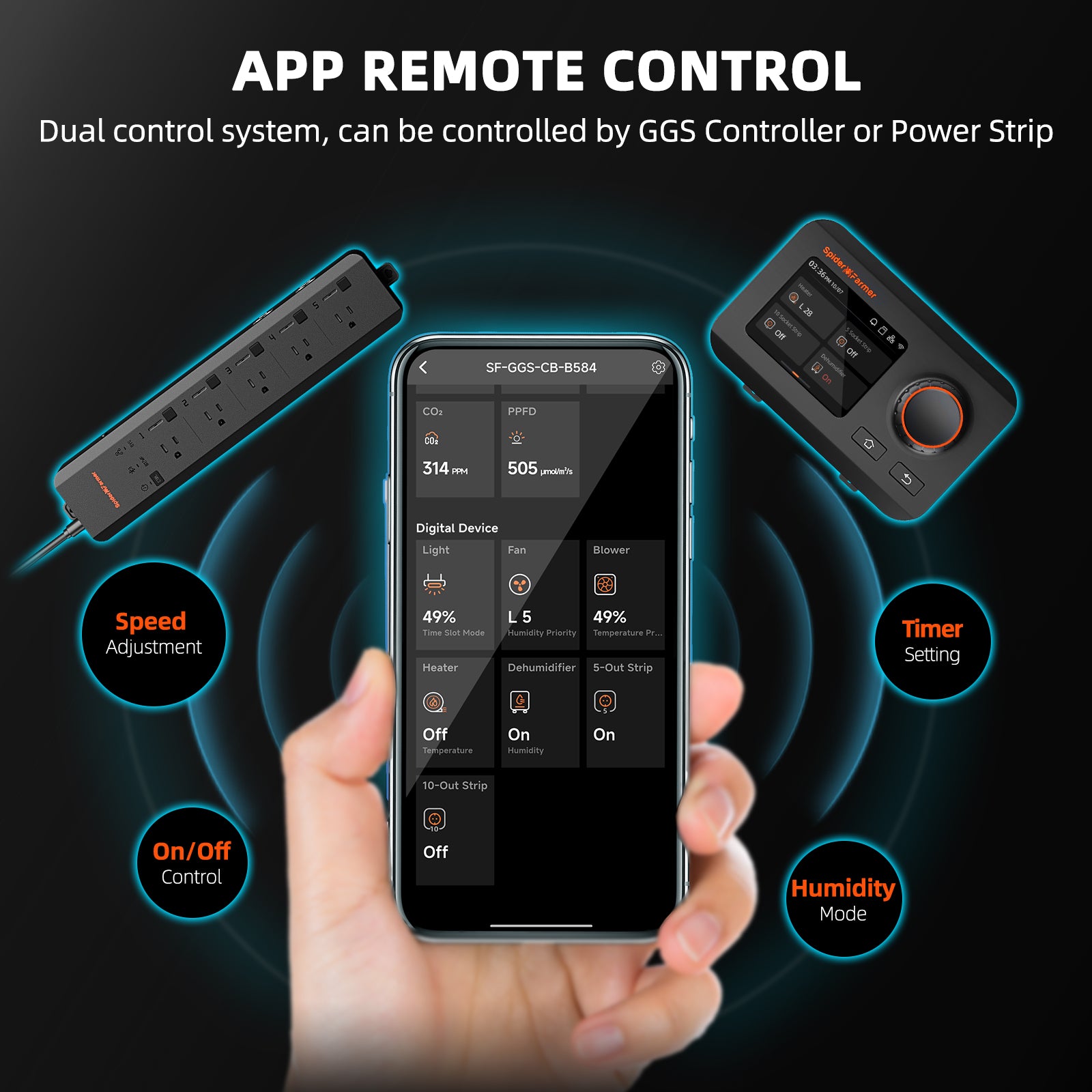
APP Control: Remotely manage your dehumidifier via the Spider Farmer app, even when you're away. Seamlessly connect to the Spider Farmer GGS series for intelligent control of the dehumidifier’s windspeed and runtime. Easily simulate natural environmental conditions and adjust settings for precise humidity control, ensuring your grow space stays within the ideal range for optimal plant growth.(Updated after July 9, 2025)
-
Water Full Alert: When the water tank is full, the dehumidifier will automatically stop and display a red "Water Full" icon both in the app and on the unit. This prevents any further operation until the tank is emptied, ensuring no increase in humidity. Once the tank is emptied, the dehumidifier will automatically resume its operation without any manual intervention.
-
Drying Function: The ideal humidity range for drying is 45-55%. While regular dehumidifiers speed up the drying process, they often cause a loss of flavor, potency, and overall enjoyment. Our dehumidifier allows you to set it to Low Speed, providing a slow, low-temperature drying process that preserves the quality of your flowers during the drying phase.
5.Other factors to consider
If your room is sealed and equipped with an air conditioner, the air conditioner will remove some moisture. Check how many pints of moisture your air conditioner removes daily and subtract this amount from your daily dehumidification needs.